The Role of Technology in Commercial Damage Restoration: Innovations for Efficient Recovery
The commercial damage restoration industry is continually evolving to include new technologies. These technologies have revolutionized repairs, such as water extraction and mitigation, as well as how damage assessments are conducted.
In this blog, we’ll explore the role of technology in commercial damage restoration. These technologies are leading the way for safer and more efficient repairs for businesses, hospitals, offices, and schools nationwide. Keep reading to learn more.
5 Commercial Restoration Technologies Revolutionizing the Industry
As is true with any industry, there is always room for improvement. In the commercial restoration sector, advancements in technologies have made it easier to simplify workflows from a behind-the-scenes perspective and assist with risk management and early detection of potential problems. This allows restoration teams to make necessary repairs before these issues get worse.
While this is not an exhaustive list, here are the top five commercial restoration technologies currently revolutionizing the industry.
1. Advanced Water Extraction Techniques
When water damage affects your commercial property, any restoration professional will advise you to make immediate repairs. The longer water sits, the more likely it is to lead to mold. Because of the importance of fast response time, technology has made it easier to address this need.
Today, technological advancements have led to new water extraction techniques, including automated water extraction and thermal imaging. Thermal imaging has been a game-changer in finding water damage hidden behind walls or beneath floorboards so it can be extracted. With this technology, technicians can find damage that would be seen only after demolition. This advancement allows technicians to streamline the restoration process so clients reap the benefits sooner.
The same concept applies to automated extraction systems, which are ideal for commercial properties that have suffered significant water damage. These systems require little to no manual operation and use sensors to detect water and pumps to extract it. This advancement is ideal for properties with water damage around their concrete foundation.
2. Cutting-Edge Drying Equipment
Drying is one of the most critical steps in the water restoration process. As mentioned above, the longer water sits in or around a property, the more likely it is to develop mold. Common interior molds like Aspergillus and Cladosporium grow in as little as 24 hours after moisture exposure.
One such piece of cutting-edge drying equipment includes LGR dehumidifiers. These LGR dehumidifiers, which stand for low-grain refrigerant, have faster moisture evaporation rates for several reasons. First, they work efficiently even in low humidity, which may result from cooler outdoor temperatures. Just like traditional dehumidifiers, this helps inhibit mold growth inside the building.
The second reason they’re so beneficial is because they also help dry out wet building contents, including carpets. So, if you have an office building that suffered a leak, these LGR dehumidifiers will make it easier to dry out rugs, hardwood floors, and other materials. Lastly, these dehumidifiers remove more moisture from the air than traditional dehumidifiers, making the water restoration process much more efficient.
3. Infrared and Thermal Imaging for Damage Assessment
Earlier, we mentioned thermal imaging for detecting water damage, but this technology can also be used in various commercial damage restoration projects, including fire damage restoration, improving air quality, and even finding electrical wiring issues.
In all these cases, thermal imaging uses infrared cameras to find hidden damage without demolition. In a fire damage assessment, for example, these infrared cameras can detect electrical hazards and areas at risk of reigniting. They can even detect current temperature levels, which lets restoration teams understand the extent of damage and the steps needed to remedy it.
4. Air Scrubbers and Purification Systems
Whether treating water, fire damage, or mold damage, air scrubbers and purification systems are integral to restoring your place of business.
When your commercial property experiences fire, smoke, water, or mold damage, more than just the walls, floors, or items inside the room should be treated. Air quality must be addressed before smoke and mold spores are picked up by your building’s HVAC system and spread throughout the property. Your restoration team will utilize advanced air scrubbers and purification systems to stop the spread.
Among the top air scrubbers contractors use are those equipped with a HEPA air filtration system. These filters are renowned for their exceptional ability to remove over 99% of airborne particulates, provided they are at least 0.3 microns in size. This high filtration capability makes HEPA filters a powerful tool for restoring air quality in commercial properties.
Recent technological advancements in air scrubbers have introduced built-in UV lights, which are effective in killing airborne particles. Similarly, modern air purification systems now feature activated carbon filters, which are particularly useful in treating odors associated with mold. These innovations have significantly enhanced the capabilities of air scrubbers and purification systems, making them indispensable in the commercial damage restoration industry.
5. Drones for Roof and Exterior Inspections
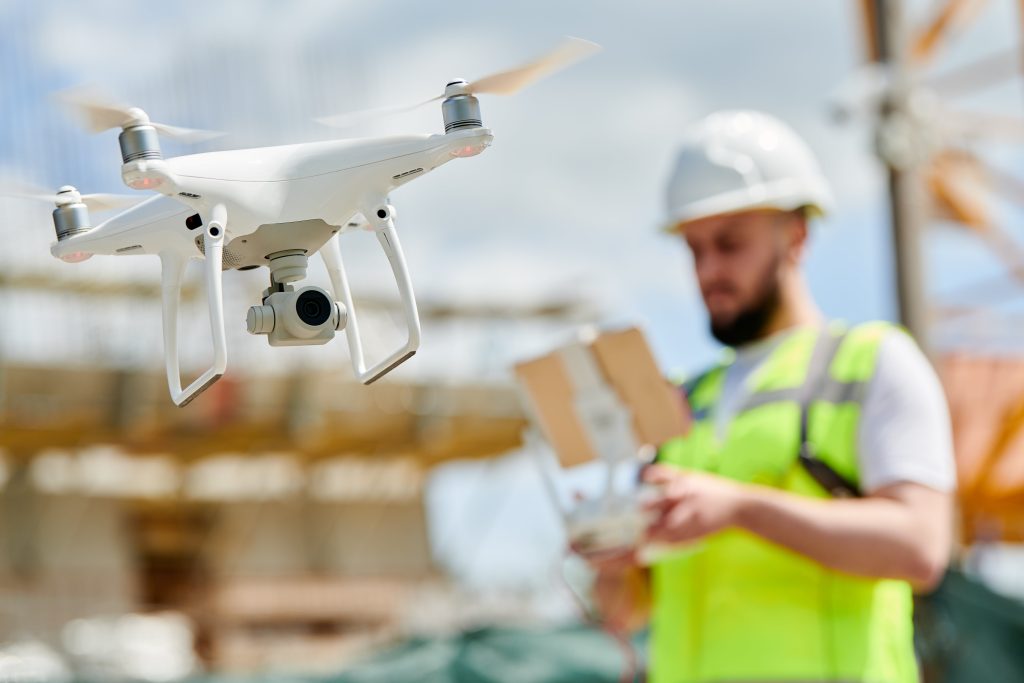
Drones have soared in popularity recently, including their use in commercial roofing and other exterior building inspections.
Traditionally, roof inspections required technicians to climb a ladder and conduct a manual search. But now, drones have eliminated that step, allowing restoration techs to get a bird’s-eye view of roof damage in a matter of minutes.
Not only do these drones offer a lot less risk to restoration techs, but they streamline the entire process by being able to capture high-resolution images, including video. These visual captures allow restoration teams to create 3D models outlining the next phase of the restoration process. Particularly, these 3D models make it easy to identify any design or repair flaws ahead of time so they can make adjustments before the project even starts.
Whether used for roof repair and installation, exterior inspections of hard-to-reach areas, or even checking for solar panel defects, drones speed up the process and ensure that every issue is identified and treated.
Contact BluSky for Quality Commercial Damage Restoration Services and Experience the Benefits of the Latest Recovery Innovations
All of these technologies have aided the commercial damage restoration process by simplifying workflows and streamlining it while ensuring accuracy. Drones can inspect structural issues in hard-to-reach places that are unsafe for workers to reach, and thermal imaging helps contractors make detailed restoration plans. Technology brings peace of mind and customer satisfaction to business owners.
Contact our team if you’re in the market for thorough commercial damage restoration services. At BluSky, we have extensive experience handling commercial damage restoration, including those brought on by mold, a storm, or a fire. We work with a wide range of industries, including but not limited to restaurants, malls, factories, schools, and hospitals. You don’t have to face restoration projects alone. Give us a call at 800-266-5677 to speak to a member of our team.